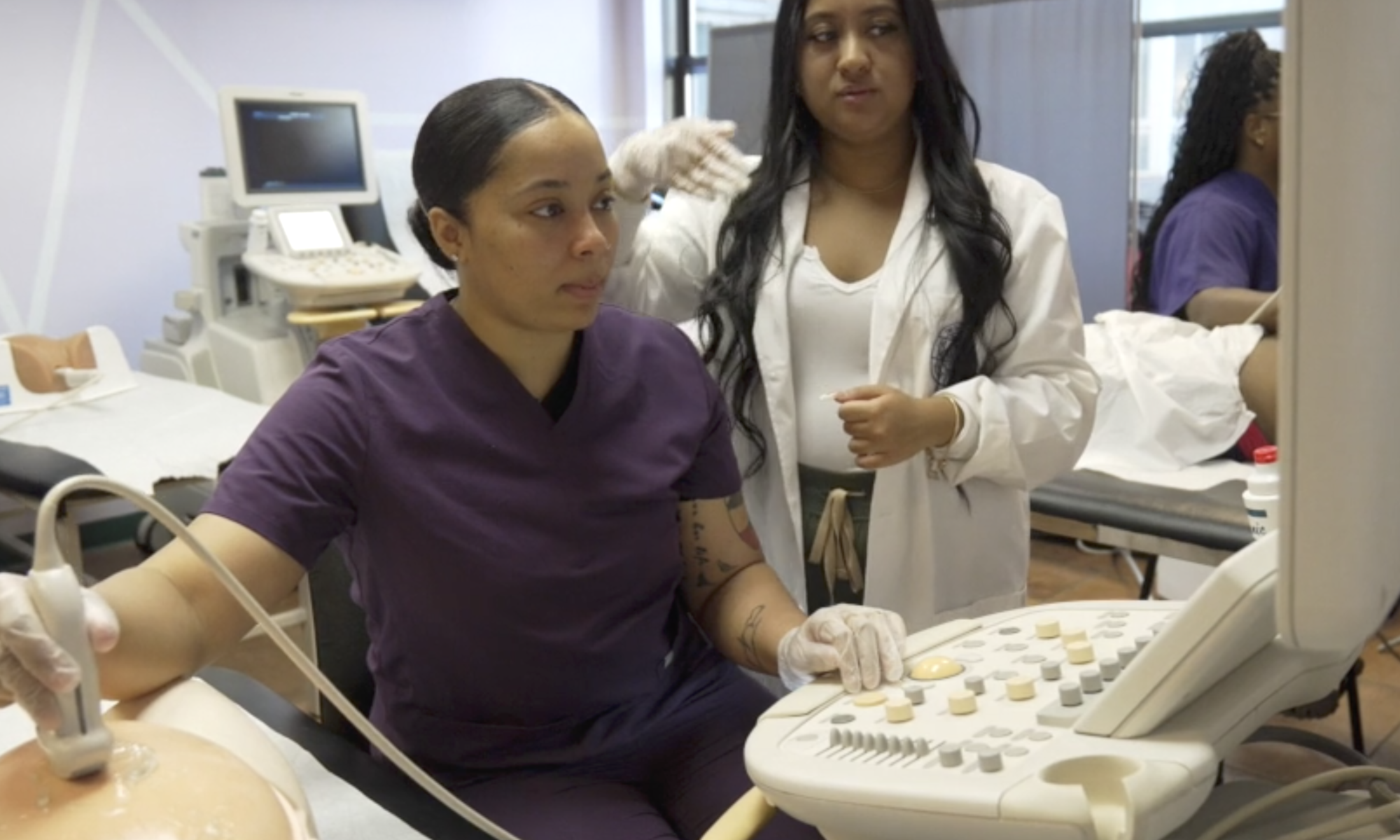
Skip to navigation Menu

Breathing Life Into Your Career: Opportunities in Respiratory Therapy

Respiratory Therapy Degree program healthcare

Every time a patient struggles to breathe, after a heart attack, a premature birth, a severe asthma flare, or a bout of pneumonia, a respiratory therapist is usually one of the first clinicians at the bedside. It’s a career built on a simple, urgent skill: helping people breathe. And right now, hospitals, sleep labs, rehabilitation centers, and home care agencies across the country can’t train and hire respiratory therapists (RTs) fast enough.

If you’re exploring a hands-on healthcare career with real staying power, respiratory therapy deserves a close look, and so does the question of where you earn your degree.

A field that’s growing faster than most

Respiratory therapy isn’t a niche specialty anymore, it’s one of the more dependable growth paths in allied health. The U.S. Bureau of Labor Statistics projects employment for respiratory therapists to grow about 12–13% over the coming decade, far outpacing average job growth, with roughly 8,800 to 10,300 openings expected each year as the field expands and experienced therapists retire or move on.

A few forces are driving that demand:

  • An aging population. Older adults are more likely to develop chronic conditions like COPD, pneumonia, and other cardiopulmonary diseases that require ongoing respiratory care.
  • Advancing medical technology. Ventilators, diagnostic equipment, and home-care devices are more sophisticated than ever, and someone has to operate, monitor, and teach patients to use them.
  • Expanding care settings. RTs are no longer confined to hospital ICUs, they now work in sleep labs, outpatient pulmonary clinics, skilled nursing facilities, home healthcare, and emergency transport.

Compensation reflects that demand. The median annual wage for respiratory therapists was around $80,000 as of the most recent BLS data, with experienced therapists in critical care, charge-therapist, or supervisory roles often earning more. Career paths can lead from staff therapist to charge therapist, department supervisor, or director of respiratory care, or into specialized tracks like neonatal/pediatric care, critical care, or sleep medicine.

What it actually takes to become an RT

Unlike many growing healthcare roles, respiratory therapy has a clear, well-defined path in, but it’s a real credentialing process, not a weekend certificate:

  1. Earn an accredited associate degree. The entry-level credential for RTs is an Associate in Applied Science (A.A.S.) in Respiratory Therapy, and it must come from a program accredited by the Commission on Accreditation for Respiratory Care (CoARC). This accreditation isn’t optional, graduating from a non-accredited program can block you from sitting for licensure exams entirely.
  2. Pass the Therapist Multiple-Choice (TMC) Examination. Administered by the National Board for Respiratory Care (NBRC), this exam has two scoring tiers. Hitting the lower cut score earns the Certified Respiratory Therapist (CRT) credential, required to practice in all 50 states.
  3. Pursue the Registered Respiratory Therapist (RRT) credential. Candidates who hit the higher TMC cut score become eligible for the Clinical Simulation Examination (CSE). Passing both earns the RRT, the credential most hospitals and health systems now prefer, and often require, for hiring.
  4. Get licensed in your state. Most states require licensure in addition to national certification before you can practice.

In other words: your degree program is the gatekeeper. If it isn’t CoARC-accredited, every step after it is at risk.

Why the degree program you choose matters so much

Because the entire career runs through one accredited credential, the school behind that credential isn’t a minor detail, it’s the foundation everything else is built on. A strong program should give you:

  • CoARC accreditation, so your degree actually qualifies you to sit for the TMC and CSE exams.
  • Real clinical hours, not just classroom theory, hands-on time with ventilators, airway management, blood gas analysis, and patient care under supervision.
  • A realistic timeline, so you can plan your finances and your life around finishing.
  • Career services and placement support, since your first job out of school is often the hardest one to land.
  • A location close to major hospital systems, which usually means richer clinical rotation sites and stronger local employer relationships.

Skipping any of these isn’t just a minor inconvenience, it can mean graduating with a degree that doesn’t actually open the door to licensure.

Where Mandl School fits in

Mandl School, The College of Allied Health, located in midtown Manhattan, offers an A.A.S. in Respiratory Therapy built specifically around that credentialing path:

  • 68 credits, 1,875 clock hours, delivered over 75 weeks, a focused, full-time timeline rather than a multi-year general-education slog.
  • Dual accreditation: the program is accredited by CoARC (program number 200611) for respiratory therapy specifically, and the school itself is accredited by the Accreditation Bureau for Health Education Schools (ABHES), the combination that keeps graduates eligible for the TMC and CSE exams.
  • A curriculum built around the job, not just the test: cardiopulmonary evaluation, therapeutic gas and ventilator management, artificial airway care, medication administration, and cardiopulmonary rehabilitation, alongside the patient- and family-education skills RTs use daily.
  • A New York City location, placing students near a dense network of hospitals, sleep labs, and health systems for clinical training and, often, first jobs.

For someone drawn to respiratory therapy’s blend of technical skill and direct patient impact, a program this tightly aligned with the field’s actual licensure requirements removes a lot of the guesswork, you’re not wondering whether your diploma will actually get you to the exam room.

The bottom line

Respiratory therapy offers something increasingly rare in today’s job market: strong, well-documented demand; solid pay; and a clear, credential-based path from classroom to career. But that path only works if it starts with the right degree, one that’s properly accredited and genuinely prepares you for the TMC and CSE exams. A focused, accredited program like the one at Mandl School is designed to do exactly that, giving students a direct route from enrollment to a respiratory therapy career.

Interested in learning more? Visit mandl.edu/programs/respiratory-therapist or reach out to Mandl’s admissions team 212-247-3434 to request information.

Want to send us an application, APPLY HERE!

Getting Your Healthcare Associate Degree in NYC: Why Mandl School

Mandl School Healthcare Degree programs
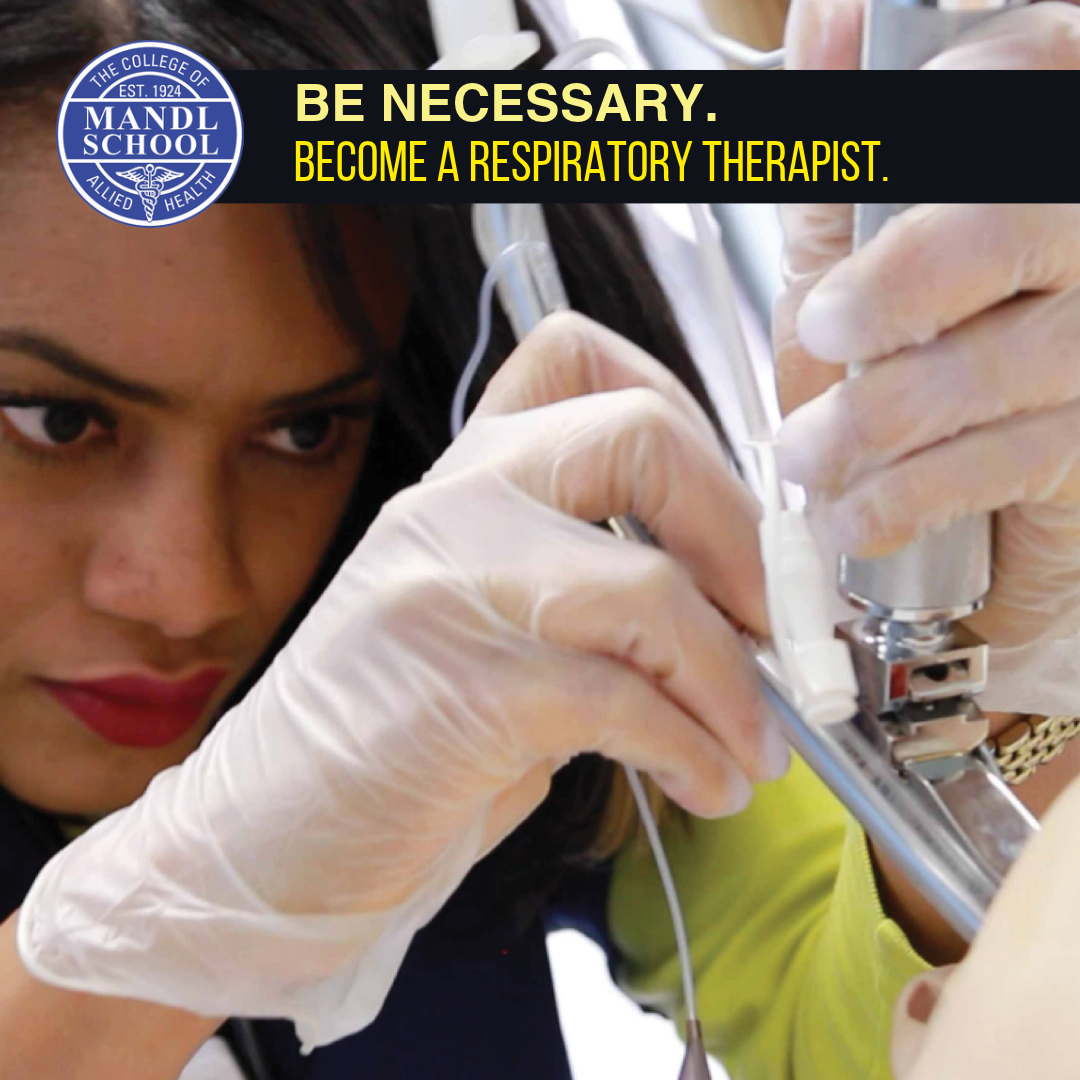
New York City has one of the largest, busiest healthcare systems in the country, and that means one thing for job seekers: steady demand for trained allied health professionals. From Manhattan’s major hospital networks to clinics and practices in every borough, the city needs people who understand how healthcare actually runs. If you’re thinking about a fast, practical way into that world, an associate degree in healthcare, earned right here in NYC, is one of the most direct routes available.

Why an associate degree makes sense

Not everyone wants, or needs, a four-year commitment to start a healthcare career. An Associate in Applied Science (A.A.S.) degree is built for people who want real, hireable skills in a shorter, more focused timeframe. A few reasons this path works so well:

  • Faster time to work. Most allied health associate programs run well under two years, so you can be job-ready while others are still finishing general-education requirements.
  • Career-specific training from day one. Instead of broad electives, your coursework is built around the job you’re training for, whether that’s patient care, medical coding, administration, or clinical support.
  • Lower cost than a bachelor’s degree. A shorter program generally means less tuition and less time away from earning a paycheck.
  • A credential employers recognize. Hospitals, clinics, and healthcare administrators across NYC actively hire associate-degree graduates for entry-level and specialized roles alike.

The healthcare field overall continues to add jobs faster than most other industries, and administrative, technical, and support roles are a big part of that growth.

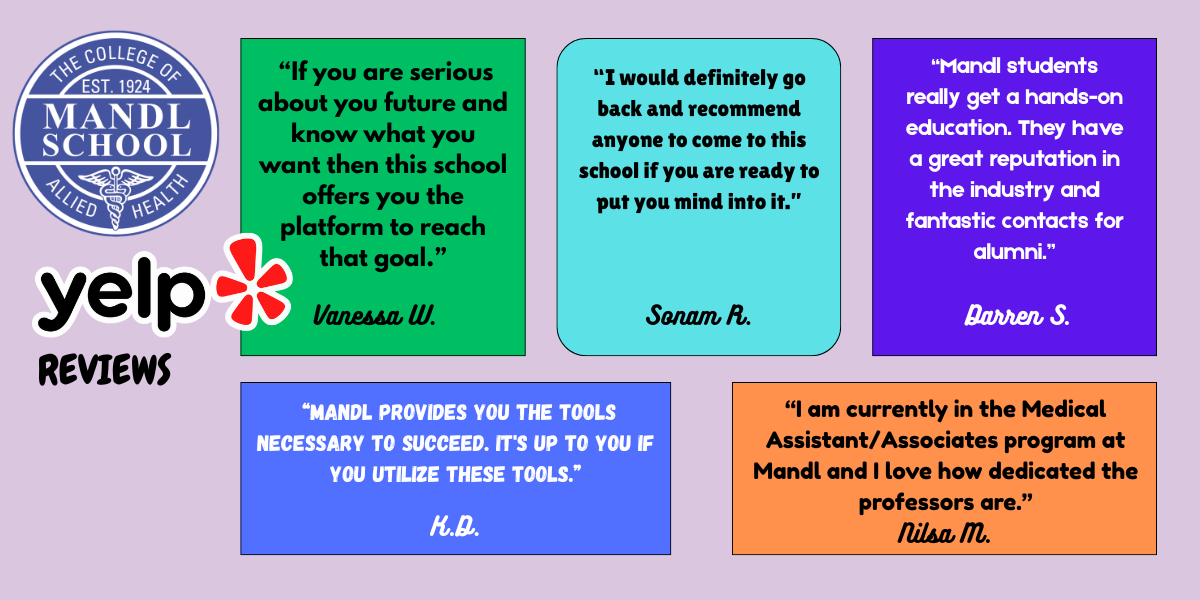
Reviews for Mandl School from Yelp!

Why Mandl School

Mandl School, The College of Allied Health has been training allied health professionals in midtown Manhattan for decades, and its programs are built around the same idea: get students into real careers, efficiently and well prepared.

  • A central NYC location. Mandl’s campus at 254 W 54th St puts students close to a dense network of hospitals, labs, and healthcare employers, which matters for clinical placements, internships, and that crucial first job.
  • A range of focused associate programs. Students can choose from degrees including Respiratory Therapy, Diagnostic Medical Sonography, Surgical Technologist, and Health Care Administration (available both on campus and fully online), along with certificate options in Medical Assisting and Dental Assisting.
  • Programmatic accreditation that matters. Mandl’s clinical programs carry accreditation from the relevant national bodies for their fields, which keeps graduates eligible for the licensing and certification exams their careers depend on.
  • Career-focused curriculum. Courses are built around the practical, real-world skills employers are actually hiring for, from clinical procedures to coding, billing, and healthcare administration.
  • Support built for working adults. Career development, tutoring, and financial aid counseling are available to help students finish strong and transition into the workforce.

For someone who wants a healthcare associate degree without leaving NYC, or without needing to choose between convenience and quality, Mandl offers a well-established, locally rooted option.

Ready to get started?

An associate degree can be the quickest, most practical path into a stable healthcare career, and doing it in New York City means training where the jobs actually are. If Mandl School sounds like the right fit, visit mandl.edu/programs to explore degree options, or reach out to their admissions team to request more information.

To send us an application, CLICK HERE.

Why Mandl School’s Accreditations Actually Matter

Accreditations and affiliations

Accreditation is one of those words that shows up in fine print and gets skimmed past. It shouldn’t be. For a healthcare degree specifically, accreditation is the quiet mechanism that determines whether your diploma actually opens doors, whether you can sit for licensing exams, whether financial aid is even available to you, and whether employers take your credential seriously. It is less exciting than clinical rotations or graduation day, but it is the foundation everything else stands on.

Mandl School, The College of Allied Health, lists its full accreditations and affiliations publicly, and that list is worth understanding, not just skimming.

State authorization and institutional accreditation

Before anything else, a school has to be legally authorized to grant degrees. Mandl is authorized by the Board of Regents of the University of the State of New York to award its degrees, including the Associate in Applied Science (A.A.S.) in Diagnostic Medical Sonography, Health Care Administration, and Respiratory Therapy, the Associate in Occupational Studies (A.O.S.) in Medical Assisting and Surgical Technologist, and certificates in Dental Assistant and Medical Assisting. That authorization is the basic legal ground a degree stands on.

On top of that, Mandl is institutionally accredited by the Accrediting Bureau of Health Education Schools (ABHES). Institutional accreditation evaluates the school as a whole, its resources, faculty, facilities, and educational quality, rather than any single program. It’s the difference between a school that meets recognized standards and one that simply exists.

Programmatic accreditation: the layer that really counts

Institutional accreditation covers the school. Programmatic accreditation covers the specific degree you’re pursuing, and for many healthcare careers, it’s non-negotiable. Mandl’s Respiratory Therapy program is accredited by the Commission on Accreditation for Respiratory Care (CoARC), the specialized body that evaluates respiratory therapy education specifically.

This matters because, in most healthcare fields, licensing and certification boards require a degree from a programmatically accredited school before they’ll let you sit for the exam. A general business or liberal arts accreditation does not satisfy that requirement. Graduating from a CoARC-accredited program is what keeps the door to the Therapist Multiple-Choice Examination and the Clinical Simulation Examination open for Mandl’s respiratory therapy students, including those who complete the program under the school’s current provisional accreditation status, who are still considered graduates of a CoARC-accredited program.

What these accreditations unlock: national certification

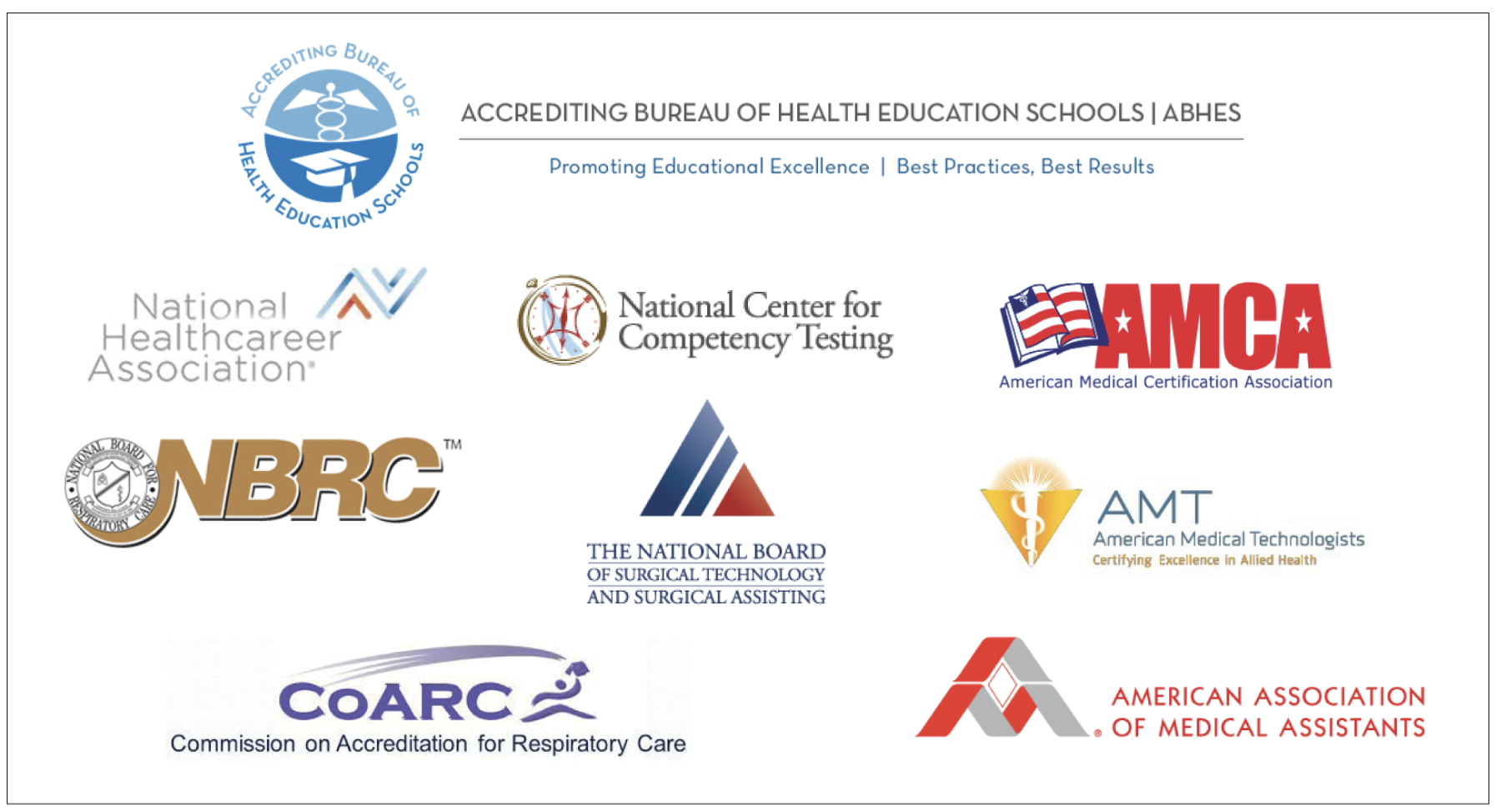
Accreditation isn’t just a label on a diploma. It’s what makes graduates eligible to sit for the national registry and certification exams employers actually ask for. Depending on the program, Mandl graduates can pursue credentials including:

  • Registered Respiratory Therapist (RRT), through the National Board for Respiratory Care
  • Registered Medical Assistant (RMA), Registered Dental Assistant (RDA), and Registered Phlebotomy Technician (RPT), through the American Medical Technologists
  • Certified Medical Assistant (CMA), through the American Association of Medical Assistants
  • Certified Surgical Technologist (CST), through the National Board of Surgical Technology and Surgical Assisting
  • ECG Technician, Medical Assistant, Phlebotomy Technician, and Tech in Surgery credentials, through the National Center for Competency Testing
  • Clinical Medical Assistant, Operating Room/Surgical Technician, and Patient Care Technician credentials, through the National Healthcareer Association

These aren’t minor add-ons. For most employers, a nationally recognized credential is the difference between an entry-level application that gets a callback and one that doesn’t.

Accreditation also opens the door to financial aid

Accreditation isn’t only about academics and licensure. It’s also a prerequisite for the financial support that makes school possible for most students. Because of its accredited, approved status, Mandl is recognized by:

  • Federal Aid, Title IV Programs
  • The New York State Higher Education Services Corporation, for the Tuition Assistance Program (TAP)
  • The Department of Education for Training Veterans
  • Adult Career and Continuing Education Services, Vocational Rehabilitation (ACCES)
  • U.S. Immigration and Customs Enforcement (ICE), for international student eligibility

Without the underlying accreditation, none of this funding infrastructure would be available to students at all.

The practical takeaway

When you’re comparing healthcare programs, accreditation should be one of the first things you check, not an afterthought. It determines whether you’ll be eligible to sit for the exam your career depends on, whether financial aid will cover your tuition, and whether employers will recognize your credential as legitimate. Mandl’s combination of state authorization, institutional accreditation through ABHES, and programmatic accreditation through CoARC for its Respiratory Therapy program gives students a clear, verified path from enrollment to licensure.

To see Mandl’s full list of accreditations and affiliations, visit mandl.edu/about/accreditation-affiliations.

How Mandl’s Career Services Help You Land Your First Healthcare Job

Graduating from a healthcare program is a major achievement. But for many students, the question that follows is just as important as the degree itself: “Now what? How do I actually get hired?”

At Mandl School, The College of Allied Health, we believe your education doesn’t end when you receive your diploma. That’s why our Career Development Center is here to support you from your first day of classes all the way through landing your first position and beyond.

You Are Not on Your Own After Graduation

One of the most common fears among new graduates is navigating the job search alone. At Mandl, you don’t have to. Our Career Services team has extensive contacts among healthcare employers across New York City and beyond — and they put those relationships to work for you.

Career Services personnel counsel and advise students throughout the entire placement process. They track job leads, develop new employment opportunities, conduct surveys with employers, and maintain placement records to continuously improve the connections between Mandl graduates and the employers who want to hire them.

And the best part? These placement services are free to Mandl graduates.

What the Career Development Center Does for You

Interview Preparation Knowing your clinical skills is one thing. Walking into a hospital or medical office and presenting yourself confidently is another. Mandl’s Career Services team provides hands-on guidance on interviewing techniques, helping you anticipate common questions, present your experience effectively, and make the kind of first impression that leads to a job offer.

Direct Employer Referrals Mandl has built relationships with some of New York City’s most respected healthcare employers over many decades. Our Career Services team makes direct referrals to those employers on your behalf — putting your resume in front of hiring managers who already know and trust Mandl graduates.

Appointment Setup Getting in front of the right employer at the right time is half the battle. Career Services staff help set up appointments with potential employers — removing one of the most stressful parts of the job search and making sure you are being considered for the right opportunities.

Ongoing Job Lead Tracking The healthcare job market in New York City moves quickly. Mandl’s placement team continuously records and tracks new job leads across the city, ensuring that graduates have access to a steady stream of current opportunities in their field.

Real Employers, Real Connections

Mandl’s Career Development Center has placed graduates at some of New York City’s most recognized healthcare institutions, including Mt. Sinai Hospital and many other leading hospitals, clinics, private practices, government health departments, and specialty facilities across the five boroughs.

When you graduate from Mandl, you are not starting from scratch. You are entering the job market with the backing of an institution that has spent decades building trust with the employers you want to work for.

Your Career Starts Before You Graduate

At Mandl, career preparation begins long before graduation. Every student receives a comprehensive orientation that introduces the Career Development Center from day one. Academic advisors and career counselors work alongside you throughout your program helping with educational planning, academic challenges, and keeping your career goals in focus at every step.

Clinical externships, which are built into every Mandl program, mean that by the time you graduate, you have already worked in real healthcare settings. You already know what it feels like to be in a clinical environment, to work alongside experienced professionals, and to deliver patient care. That experience is invaluable when you walk into your first job interview.

A Small School With Big Employer Connections

Mandl’s intentionally small size — with a student-faculty ratio that allows for genuine individual attention — means that your instructors and career advisors know you by name. They know your strengths, your goals, and the kind of environment where you will thrive.

That personal knowledge translates directly into better career guidance. Your Career Services advisor isn’t guiding hundreds of students through a generic process they are helping you specifically, with the specific program you completed and the specific type of position you are looking for.

Ready to Launch Your Healthcare Career?

Mandl School’s Career Development Center is one more reason why graduating from Mandl is more than earning a degree — it’s gaining a partner in your career for the long term.

If you are ready to start your journey, we would love to talk with you about your goals and how Mandl can help you get there.

Learn more about our Career Development Center or directly at 212-247-3434 to schedule an appointment.

Why Your Associate Degree Opens More Doors in New York City

When most people think about starting a healthcare career, they imagine years of schooling and a long wait before they can start working. But in New York City, an Associate Degree in Allied Health can be your fastest and most direct path to a meaningful, well-paying career.

At Mandl School, The College of Allied Health, one of the questions we hear most often is: “Does an associate degree really matter? Is it enough?”

The answer is yes! Here’s why.

It’s the Credential That Gets You in the Door

In New York City’s competitive healthcare job market, hospitals, medical centers, and specialty practices set the associate degree as their minimum hiring standard for roles like Medical Assistant, Respiratory Therapist, Surgical Technologist, and Diagnostic Medical Sonographer. It’s the difference between your resume making it to the interview pile or not.

The Careers You Can Launch at Mandl

All of Mandl’s Associate Degree programs are registered by the New York State Education Department and built around what NYC employers are looking for right now:

Medical Assisting (A.O.S.) — Clinical and administrative skills for offices, outpatient facilities, and specialty practices across the five boroughs.

Surgical Technology (A.O.S.) — Work alongside surgeons in the operating room. The associate degree is the industry-recommended entry-level standard.

Respiratory Therapy (A.A.S.) — Care for patients with heart and lung conditions at NYC’s major hospital systems. Graduates are eligible to sit for the Registered Respiratory Therapist (RRT) credential.

Diagnostic Medical Sonography (A.A.S.) — One of the fastest-growing healthcare careers in the country. Mandl’s 85-credit DMS program is one of the most comprehensive in the region.

Health Care Administration (A.A.S. — 100% Online) — Manage the operations, billing, and patient services that keep NYC’s healthcare system running — on your own schedule.

Why NYC Makes the Associate Degree Even More Valuable

New York City is one of the most credentialed job markets in the world. Many of the city’s leading hospital systems require graduates to hold or be eligible for state licensure or national certification and Mandl’s programs are specifically built around those requirements.

The associate degree also opens a pathway to further advancement. Many Mandl graduates go on to pursue additional certifications or four-year programs after entering the workforce. And with many students receiving grant or scholarship aid, it’s more accessible than you might think.

Ready to Start?

If you are ready to launch a healthcare career in New York City, an Associate Degree from Mandl School is one of the smartest investments you can make.

Apply Today or contact our admissions office to schedule your personal interview.

HAVE A QUESTION?

  • Please do not add "1" to your number
  • This field is hidden when viewing the form