Skip to navigation Menu

How Mandl’s Career Services Help You Land Your First Healthcare Job

Graduating from a healthcare program is a major achievement. But for many students, the question that follows is just as important as the degree itself: “Now what? How do I actually get hired?”

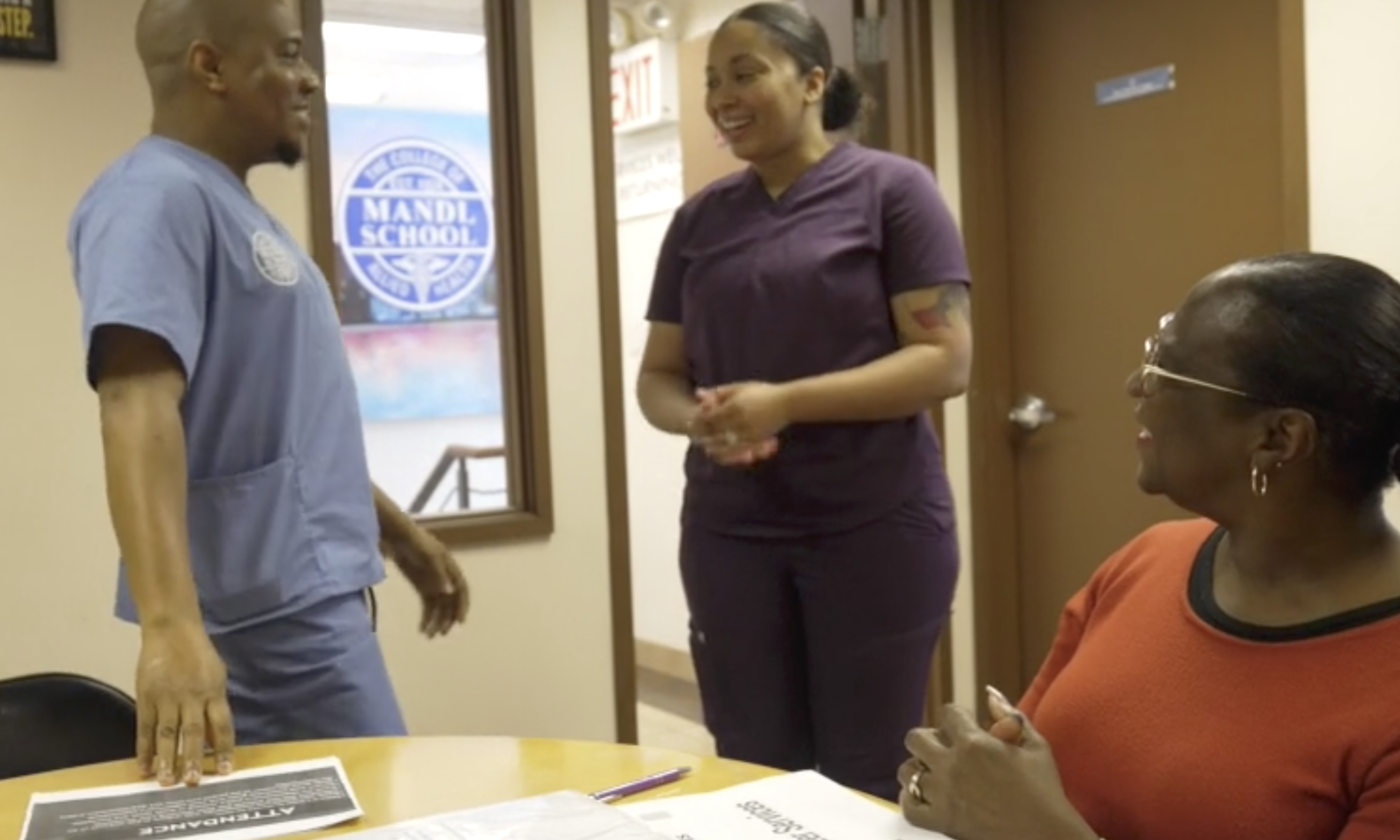
At Mandl School, The College of Allied Health, we believe your education doesn’t end when you receive your diploma. That’s why our Career Development Center is here to support you from your first day of classes all the way through landing your first position and beyond.

You Are Not on Your Own After Graduation

One of the most common fears among new graduates is navigating the job search alone. At Mandl, you don’t have to. Our Career Services team has extensive contacts among healthcare employers across New York City and beyond — and they put those relationships to work for you.

Career Services personnel counsel and advise students throughout the entire placement process. They track job leads, develop new employment opportunities, conduct surveys with employers, and maintain placement records to continuously improve the connections between Mandl graduates and the employers who want to hire them.

And the best part? These placement services are free to Mandl graduates.

What the Career Development Center Does for You

Interview Preparation Knowing your clinical skills is one thing. Walking into a hospital or medical office and presenting yourself confidently is another. Mandl’s Career Services team provides hands-on guidance on interviewing techniques, helping you anticipate common questions, present your experience effectively, and make the kind of first impression that leads to a job offer.

Direct Employer Referrals Mandl has built relationships with some of New York City’s most respected healthcare employers over many decades. Our Career Services team makes direct referrals to those employers on your behalf — putting your resume in front of hiring managers who already know and trust Mandl graduates.

Appointment Setup Getting in front of the right employer at the right time is half the battle. Career Services staff help set up appointments with potential employers — removing one of the most stressful parts of the job search and making sure you are being considered for the right opportunities.

Ongoing Job Lead Tracking The healthcare job market in New York City moves quickly. Mandl’s placement team continuously records and tracks new job leads across the city, ensuring that graduates have access to a steady stream of current opportunities in their field.

Real Employers, Real Connections

Mandl’s Career Development Center has placed graduates at some of New York City’s most recognized healthcare institutions, including Mt. Sinai Hospital and many other leading hospitals, clinics, private practices, government health departments, and specialty facilities across the five boroughs.

When you graduate from Mandl, you are not starting from scratch. You are entering the job market with the backing of an institution that has spent decades building trust with the employers you want to work for.

Your Career Starts Before You Graduate

At Mandl, career preparation begins long before graduation. Every student receives a comprehensive orientation that introduces the Career Development Center from day one. Academic advisors and career counselors work alongside you throughout your program helping with educational planning, academic challenges, and keeping your career goals in focus at every step.

Clinical externships, which are built into every Mandl program, mean that by the time you graduate, you have already worked in real healthcare settings. You already know what it feels like to be in a clinical environment, to work alongside experienced professionals, and to deliver patient care. That experience is invaluable when you walk into your first job interview.

A Small School With Big Employer Connections

Mandl’s intentionally small size — with a student-faculty ratio that allows for genuine individual attention — means that your instructors and career advisors know you by name. They know your strengths, your goals, and the kind of environment where you will thrive.

That personal knowledge translates directly into better career guidance. Your Career Services advisor isn’t guiding hundreds of students through a generic process they are helping you specifically, with the specific program you completed and the specific type of position you are looking for.

Ready to Launch Your Healthcare Career?

Mandl School’s Career Development Center is one more reason why graduating from Mandl is more than earning a degree — it’s gaining a partner in your career for the long term.

If you are ready to start your journey, we would love to talk with you about your goals and how Mandl can help you get there.

Learn more about our Career Development Center or directly at 212-247-3434 to schedule an appointment.

A Career as a Surgical Technologist: The Heroes of the Operating Room

Mandl School Surgical Technologost Degree Program

When most people think about surgery, minds often turn to the surgeon or perhaps the anesthesiologist, both critical figures in the operating room. However, there’s a vital role that often goes unnoticed but is crucial for the success of any surgical procedure: the surgical technologist. These professionals are the backbone of the surgical team, ensuring that operations run smoothly, efficiently, and safely. The Surgical Technologist degree program at Mandl School offers you an opportunity to start you career in this exciting field!

If you’ve ever considered a career in healthcare but aren’t sure where to start or what path to take, a career as a surgical technologist could be the ideal option. This blog will explore what a surgical technologist does, the skills needed to succeed, the steps to becoming one, and why this career can be incredibly rewarding. We’ve ben educating the finest Surgical Technologist in NYC and beyond.

What is a Surgical Technologist?

A surgical technologist, also known as a surgical technician or operating room technician, plays a key role before, during, and after surgery. They are responsible for preparing the operating room, ensuring all necessary instruments and equipment are sterilized and available, and assisting the surgical team during procedures. Our labs offer students a real life experience and prepare you for success.

Their duties include:
Preparing the Operating Room: Surgical technologists set up surgical instruments, sterile drapes, and solutions. They ensure all equipment is functioning properly and ready for use.
Assisting During Surgery: During surgery, they pass instruments to surgeons, maintain the sterile field, and anticipate the needs of the surgical team.
Post-Operative Responsibilities: After the procedure, they assist with cleaning the operating room and ensuring that all instruments are accounted for and sterilized for future use.

Why Choose a Career as a Surgical Technologist?

1. In-Demand Career with Job Stability
The healthcare sector is consistently one of the fastest-growing fields, and surgical technologists are in high demand. As the population ages and surgical procedures become more advanced and common, there’s a steady need for skilled professionals in the operating room. According to the U.S. Bureau of Labor Statistics, employment for surgical technologists is projected to grow faster than the average for all occupations.
2. Hands-On Experience in the Operating Room
If you’re someone who thrives in a fast-paced, high-stakes environment, becoming a surgical technologist can be highly fulfilling. You’ll be in the heart of the action, playing a direct role in helping save lives and improve patient outcomes.
3. Shorter Education Pathway
Unlike many other healthcare careers, becoming a surgical technologist doesn’t require a decade of education. Most surgical technology programs can be completed in two years with Mandl School, The College of Allied Health Surgical Technologist Associate Degree Program offering a quicker pathway to entering the workforce.
4. Opportunities for Advancement
A career as a surgical technologist offers plenty of room for advancement. With experience and further education, you can move into roles such as surgical assistant, or even specialize in areas like cardiovascular surgery or neurosurgery. Some technologists transition into management roles or become educators for future surgical technologists.

Key Skills Needed for Success

A career as a surgical technologist requires a unique blend of technical knowledge, attention to detail, and soft skills. Some of the most important qualities include:
Attention to Detail: Precision is critical in the operating room, and even small mistakes can have serious consequences.
Calm Under Pressure: The surgical environment can be intense. Surgical technologists need to remain calm, focused, and quick-thinking, especially in emergencies.
Teamwork: Surgical technologists work closely with surgeons, nurses, and other healthcare professionals, so the ability to communicate effectively and work as part of a team is essential.
Manual Dexterity: Surgical technologists must have good hand-eye coordination to handle instruments quickly and efficiently during procedures.
Physical Stamina: Long hours on your feet and the need to move quickly during procedures mean physical stamina is important for this role.

Conclusion: A Fulfilling Career Path

A career as a surgical technologist is a perfect fit for those who want to work in healthcare but are looking for an accessible, fast-paced, and hands-on profession. Surgical technologists make a significant difference in patients’ lives every day, helping to ensure that surgeries are safe, effective, and efficient.

If you’re interested in working in the medical field but want a faster route to entering the workforce, this career offers an exciting opportunity to be part of life-saving procedures without the long years of medical school. Plus, with job stability, opportunities for advancement, and the chance to make a direct impact, being a surgical technologist is as rewarding as it is essential. Contact our admissions department for more information. We can also have you speak with our career services to learn how Mandl School can help you after graduation. Apply today here to learn more!

Is a College Degree Worth it? Yes!

Ultrasound patient with medical professional

When deciding between a college degree verses no college degree, there are a variety of factors to consider. Depending on your career aspirations, you may or may not need to earn a college degree.

Healthcare Careers

If you are interested in a career in Healthcare, a college degree is quite important. Many places of hire require a degree and many careers within healthcare require licensing and certification and your degree is your ticket to preparing for these exams. Mandl School offers associate degrees in some of the most competitive and fastest growing careers in Healthcare.including Diagnostic Medical Sonography, Respiratory Therapy and Surgical Technologist.  

By evaluating the potential benefits and job opportunities of each option and weighing them against potential disadvantages, you can make an importance decision about your education going forward. Here are the top advantages to having a college degree.

Advantages to a College Degree

Creates networking opportunities: When you attend a college degree program, you get the chance to connect with a variety of other young professionals who have similar interests and career aspirations. This can help you build friendships and make important connections. Your classmates can become professional references, business partners and potential employer connections that can drive your job search.

Helps market candidates to employers: Having a college degree can help candidates standout to employers when they include their degree details on their resume. A college degree shows employers that candidates have the ability to learn and excel with multiple priorities (courses) at a time.

Without a degree you could potentially earn less on an annual basis: In some situations, those without a college degree can excel and maximize their earnings. However, it may take longer for them to achieve the same annual salary as those with college degrees. As the worker moves up the ladder, often those with a college degree will travel further and also at a higher salary all the way up.

So is an Associates Degree worth it?

According to CollegePossible.org, the answer is “yes,” and a resounding “yes!” Here are just a few reasons to believe in the value of a college degree:

  • Higher salaries, employment rates and greater job satisfaction.
  • Better health outcomes and greater life expectancy.
  • Greater job safety. The incidence of receiving workers’ compensation is 2.4 times lower.
  • Better citizenship. Those with college degrees are more than twice as likely to volunteer.
  • Stronger economies and communities. In part due to increased income from taxes, but there is also a direct correlation between an increase in a community’s college-educated population and income growth for workers of all education levels.

Mandl School has helped thousands of graduates find employment in the Healthcare industry. We’d like to help you. Apply today to learn more!

HAVE A QUESTION?

  • Please do not add "1" to your number
  • This field is hidden when viewing the form