Skip to navigation Menu

Your Path to a Dental Career Starts Here: Mandl School’s Dental Assistant Certificate Program

Mandl School Dental Careers

If you’re looking for a hands-on healthcare career that puts you at the center of patient care, the Mandl School Dental Assistant Certificate Program might be exactly the right next step.

Dental assistants are among the most valued members of any dental practice — and with Mandl’s credit-bearing, licensure-qualifying program, you’ll graduate fully prepared to step into one of the most versatile and in-demand roles in healthcare.


What Does a Dental Assistant Actually Do?

More than most people realize. Today’s dental assistants are active, skilled contributors to patient care — not just support staff.

As a dental assistant you will prepare patients for their appointments, assist the dentist chairside during procedures, take and process dental x-rays, perform basic laboratory procedures, manage infection control protocols, provide patient education, and handle front office responsibilities including scheduling and records management.

With expanded function dental assisting, the role has grown even further — dental assistants now perform certain clinical procedures in the mouth under the direction of a dentist. It’s a career with real responsibility, real variety, and real impact on patients every single day.


What You’ll Learn at Mandl School

Mandl’s Dental Assistant Certificate Program balances classroom instruction with hands-on training in our fully-equipped, on-site dental lab — giving you practical experience from day one.

You’ll develop skills in patient care and patient education, back office chairside assisting, laboratory procedures, front office management, dental radiography (x-rays), infection control procedures, and dental materials and instrumentation.

You’ll also complete externship experiences in real dental offices and clinics — so by the time you graduate, you’ve already worked in the environment where you’ll build your career.


Where Can You Work as a Dental Assistant?

One of the most appealing aspects of a dental assisting career is the range of settings available to you. Mandl’s Career Development Center helps graduates find fulfilling positions at private dental offices and group practices, dental clinics, private and government hospitals, state and local public health departments, dental schools, and dental laboratories.

Whether you prefer the intimacy of a private practice or the energy of a hospital dental department, your Mandl training prepares you for all of it.


Who Is This Program For?

The Mandl Dental Assistant Certificate Program is open to applicants who have received a high school diploma or equivalent (G.E.D.). If you’re detail-oriented, enjoy working with people, and want a healthcare career you can launch quickly — this program is built for you.

You don’t need prior healthcare experience. You just need the drive to learn and a genuine interest in helping patients feel comfortable and cared for.


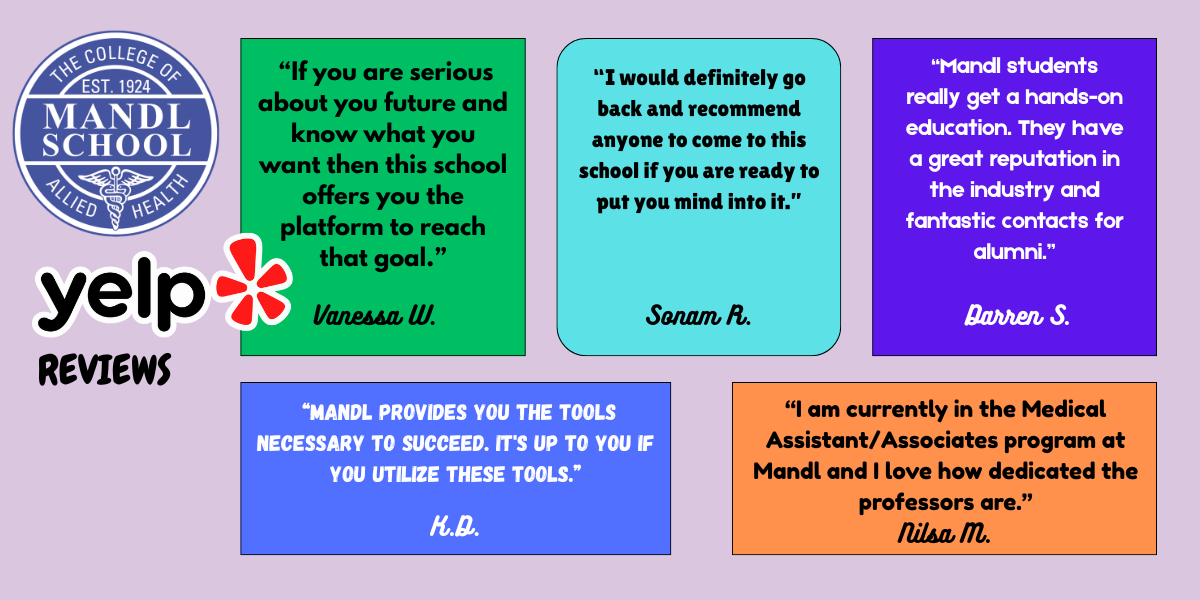
Yelp Reviews for Mandl SchoolWhy Mandl School?

At Mandl School, The College of Allied Health, we’ve been preparing healthcare professionals for careers in New York City and beyond for decades. Our Dental Assistant program is consistently recognized as one of the top dental assistant schools in NYC — and our graduates go on to build lasting careers in practices across the city and region.

Our Career Development Center works with you beyond graduation — connecting you with employers and helping you land the position that’s right for you.

If you’re ready to start a career that puts your skills to work every day in a setting that matters, we’d love to talk.

Apply Today or contact us to speak with one of our admissions advisors.

Mandl School — The College of Allied Health | Manhattan, New York

Is a Career in Cardiac or Vascular Imaging Right for You? Meet Track Two in Mandl’s Diagnostic Medical Sonography Program

Mandl School Diagnostic Medical Sonography scanning a patients neck

If you’re drawn to the heart — how it beats, how blood flows through the body, and how imaging technology can detect life-threatening conditions before they become crises — Track Two in Mandl School’s Diagnostic Medical Sonography program may be exactly what you’ve been looking for.

Track Two: Adult Echocardiography and Advanced Vascular Sonography prepares students for specialized careers in cardiac and vascular ultrasound imaging — two of the most technically demanding and rewarding paths in the field. Ready to apply now? Click here!


What Is Adult Echocardiography and Vascular Sonography?

Echocardiography uses ultrasound technology to create detailed images of the heart — its chambers, valves, structure, and function. Vascular sonography focuses on the blood vessels throughout the body, using advanced Doppler imaging to evaluate circulation, detect abnormalities, and assess conditions like stenosis, grafts, and bypass vessels.

Together, these two specialties sit at the intersection of technology and life-saving diagnostics. The images you produce help cardiologists and vascular specialists diagnose heart disease, monitor conditions, and make critical treatment decisions for their patients.


What You’ll Learn in Track Two

Students in Track Two develop skills across two interconnected areas:

Cardiac Imaging:

  • Evaluating heart chambers and valves
  • Assessing cardiac structure and function
  • Identifying and documenting heart disease conditions

Vascular Imaging:

  • Evaluating blood vessels and circulation
  • Advanced Doppler imaging principles and hemodynamics
  • Identifying vascular abnormalities, stenosis, grafts, and bypass vessels

Beyond the specialty skills, all Mandl Diagnostic Medical Sonography students build a strong foundation in ultrasound physics and instrumentation, cross-sectional anatomy, physiology and pathology, patient positioning and scanning techniques, critical thinking and problem solving, professional communication, patient-centered care, and safety procedures and quality control.

Graduates of Track Two are prepared to sit for the RDCS (Registered Diagnostic Cardiac Sonographer) and RVT (Registered Vascular Technologist) certification exams — nationally recognized credentials that open doors in hospitals, cardiology practices, vascular labs, and specialty imaging centers across New York City and beyond.


Who Is Mandl’s Adult Echocardiography and Vascular SonographyTrack Right For?

Our Adult Echocardiography and Vascular Sonography Track is an excellent fit for students who are interested in cardiology and cardiovascular imaging, drawn to advanced diagnostics and technical precision, looking to work in hospital cardiology departments, vascular labs, or specialty practices, and motivated by the challenge of mastering complex imaging technology.

If the idea of using ultrasound to evaluate a beating heart or map blood flow through the body excites you — this is your track.


A Growing Field With Strong Career Outlook

The demand for cardiac and vascular sonographers continues to grow. As the U.S. population ages and cardiovascular disease remains one of the leading health concerns in the country, hospitals and specialty practices need skilled imaging professionals who can provide accurate, timely diagnostic images.

A career in echocardiography or vascular sonography offers competitive salaries, strong job stability, and the daily satisfaction of contributing to patient care in a meaningful way.


Mandl School reviewsWhy Choose Mandl School ?

At Mandl School, The College of Allied Health, our Diagnostic Medical Sonography program combines classroom instruction, hands-on laboratory training, and supervised clinical experience — so you graduate ready to work, not just ready to test.

Our program is accredited by CAAHEP (Commission on Accreditation of Allied Health Education Programs), which means you’re eligible to sit for ARDMS, RDCS, and RVT certification exams upon completion.

With flexible scheduling built around working New Yorkers and a program length of approximately 90 weeks, Mandl gives you a focused, efficient path to a specialized healthcare career.


Ready to Learn More?

If a career in cardiac or vascular imaging sounds like the right path for you, we’d love to tell you more about Track Two and what life looks like as a Mandl student.

Apply Today or contact us to speak with an admissions advisor — we’re here to help you take the first step.

Mandl School — The College of Allied Health | Manhattan, New York

Diagnostic Medical Sonography: From Associate’s Degree to High-Demand Careers in NYC

Diagnostic Medical Sonography Sonogram Mandl School

Transform Your Future With Specialized Imaging Skills NYC Healthcare Needs

New York City’s healthcare system is booming. From world-class medical centers in Manhattan to growing specialty hospitals across the boroughs, NYC’s healthcare employers are actively recruiting skilled diagnostic medical sonographers. But not every entry-level healthcare job offers the same career growth, earning potential, or job security.

An associate’s degree in Diagnostic Medical Sonography is your pathway to a respected, specialized healthcare career. At Mandl School, The College of Allied Health, we prepare students for one of the most in-demand healthcare professions in New York City. Whether you’re interested in abdominal imaging, obstetrical and gynecological sonography, cardiac specialization, or advanced vascular imaging, a credential-backed career in diagnostic medical sonography positions you as a skilled, recognized imaging professional.

Why an Associate’s Degree in Diagnostic Medical Sonography Matters in NYC Healthcare

Here’s what employers in New York City are looking for:

  • Credentials that verify imaging expertise – An associate’s degree in diagnostic medical sonography demonstrates you’ve completed rigorous training and are ready for clinical responsibility in imaging
  • National certifications – NYC hospitals and imaging centers prioritize candidates with ARRT (American Registry of Radiologic Technologists) or CCI (Cardiovascular Credentialing International) credentials
  • Specialized ultrasound skills – Healthcare systems need skilled sonographers with proven technical expertise, not general healthcare workers with minimal imaging training
  • Advancement-ready professionals – An associate’s degree is your foundation for career growth, specialization in advanced imaging, and significantly higher earning potential

The stark reality: Without an associate’s degree or sonography certification, you’re competing for entry-level healthcare positions with minimal earning potential and limited growth. With an associate’s degree and national certification, you’re positioned for respected imaging roles in NYC’s top medical centers with career pathways that lead to specialization, advancement, and significantly higher compensation.

Diagnostic Medical Sonography in NYC: The Opportunity

What Diagnostic Medical Sonography Offers

Diagnostic medical sonography is a respected healthcare profession that offers:

  • Clinical impact – Ultrasound is essential across countless diagnostic applications: pregnancy imaging, cardiac assessment, vascular evaluation, abdominal imaging, and emergency medicine
  • Non-invasive focus – Ultrasound emphasizes patient safety without radiation exposure
  • Diverse practice settings – Work across hospitals, imaging centers, specialty practices, and academic medical centers in NYC
  • Technical expertise – Master complex imaging technology and clinical decision-making

Sonographers are essential members of the healthcare team. Your imaging directly guides diagnosis, treatment decisions, and patient care.

What You’ll Learn: Two Specialization Tracks in Diagnostic Medical Sonography

Building Specialized Imaging Expertise

An associate’s degree in Diagnostic Medical Sonography from Mandl School prepares you to perform and understand ultrasound examinations with clinical expertise. We offer two distinct tracks—each designed for different career goals and specialization interests.

Track 1: General Diagnostic Sonography

Abdomen, OB/GYN, and Basic Vascular Imaging

This comprehensive track prepares you for careers in general diagnostic ultrasound with broad clinical expertise across multiple body systems:

Abdominal Imaging

  • Liver, kidneys, gallbladder, pancreas, and spleen assessment
  • Comprehensive abdominal organ imaging for diagnostic accuracy
  • Pathology recognition and clinical correlation

Obstetrical & Gynecological Imaging

  • Female reproductive system anatomy and pathology
  • Pregnancy development and fetal growth monitoring
  • Pelvic structures and OB/GYN diagnostics
  • Prenatal screening and patient education

Basic Vascular Imaging

  • Vascular circulation assessment and anatomy
  • Doppler flow studies and basic hemodynamic principles
  • Introduction to vascular pathology

Clinical Foundation

  • Rigorous anatomy and physiology education
  • Ultrasound physics and technical principles
  • Image acquisition techniques and clinical protocols
  • Patient care and professional communication
  • Preparation for ARRT (American Registry of Radiologic Technologists) certification

Ideal For:

  • Students interested in women’s health and family-centered care
  • Candidates drawn to general medical imaging with diverse specialties
  • Professionals seeking broad diagnostic ultrasound expertise
  • Those interested in obstetrics and pregnancy imaging
  • Career-focused individuals wanting multi-specialty sonography options

Track 2: Advanced Echocardiography and Vascular Sonography

Specialized Cardiac and Vascular Imaging

This advanced track prepares you for specialized careers in cardiac and vascular ultrasound imaging—for students ready to master complex cardiovascular science:

Advanced Cardiac Imaging (Echocardiography)

  • Complex cardiac anatomy and structural relationships
  • Heart chambers, valves, and function assessment
  • Cardiac pathology and disease conditions
  • Advanced Doppler techniques: pulsed-wave, continuous-wave, and color flow imaging
  • Hemodynamic principles and pressure gradient measurements
  • Clinical correlation with cardiology diagnoses

Advanced Vascular Imaging

  • Comprehensive vascular anatomy: arteries, veins, and circulation patterns
  • Blood flow physics and hemodynamic principles
  • Advanced Doppler waveform analysis and interpretation
  • Vascular pathology: stenosis, occlusion, aneurysm, and graft assessment
  • Bypass graft and interventional follow-up imaging

Advanced Technical Foundation

  • Sophisticated ultrasound physics specific to cardiac and vascular applications
  • Advanced anatomy and physiology with cardiovascular specialization
  • Hemodynamic calculations and clinical decision-making
  • Preparation for ARRT and RDCS (Registered Diagnostic Cardiac Sonographer) or RCVS (Registered Cardiovascular Sonographer) credentials

Ideal For:

  • Students with strong math and physics aptitude
  • Candidates passionate about cardiology and cardiovascular medicine
  • Professionals interested in advanced diagnostic imaging specialization
  • Those drawn to technical complexity and clinical specialization
  • Career-focused individuals aiming for elite imaging roles in cardiac centers

The science matters. Success in diagnostic medical sonography requires strong foundational knowledge of anatomy, physiology, and physics. Your education goes far beyond learning equipment buttons—it’s mastering the science behind the imaging. The advanced track demands even greater technical and scientific rigor.

Flexible Career Paths

Your sonography credential opens doors beyond traditional imaging:

  • Hospital ultrasound departments – Steady shifts with benefits and advancement opportunities
  • Specialty imaging centers – Focus on specific imaging modalities or patient populations
  • Private practices and clinics – Build relationships with referring physicians
  • Specialty hospitals – Work in cardiac centers, women’s health hospitals, or vascular specialty practices
  • Academic medical centers – Combine clinical work with research or education
  • International opportunities – Your ARRT credential is recognized globally

Why Mandl School for Your Diagnostic Medical Sonography Associate’s Degree?

Mandl School’s diagnostic medical sonography programs are built for working New Yorkers:

  • Flexible scheduling – Classes designed around work and life responsibilities; not traditional full-time college requirements
  • Two distinct tracks – Choose between General Diagnostic Sonography (broad expertise) or Advanced Echocardiography and Vascular Sonography (cardiac specialization)
  • NYC-focused training – Our partnerships with major NYC medical centers ensure you learn on the same equipment and in the same clinical environments where you’ll work
  • Career-ready graduates – Our programs focus on the skills and credentials employers in NYC healthcare actually demand
  • Rigorous standards – We prepare you not just to graduate, but to pass national certification exams (ARRT, CCI, RDCS, or RCVS) and succeed in competitive imaging roles
  • Hands-on clinical training – Extensive clinical internships with real patient cases prepare you for day-one job readiness
  • Specialized faculty – Learn from experienced sonographers working in NYC’s leading imaging departments

The Bottom Line

An associate’s degree in Diagnostic Medical Sonography from Mandl School prepares you with the skills, knowledge, and national credentials to become a skilled ultrasound imaging professional. Your credentials are recognized across NYC’s medical centers and imaging facilities.

Your career in diagnostic imaging starts with choosing the right path. Are you ready to specialize in ultrasound?

Mandl School, The College of Allied Health – Preparing skilled sonographers for New York City’s most respected medical centers, imaging centers, and specialty practices.

Why an Associate Degree in Healthcare Is the Smartest Investment You Can Make

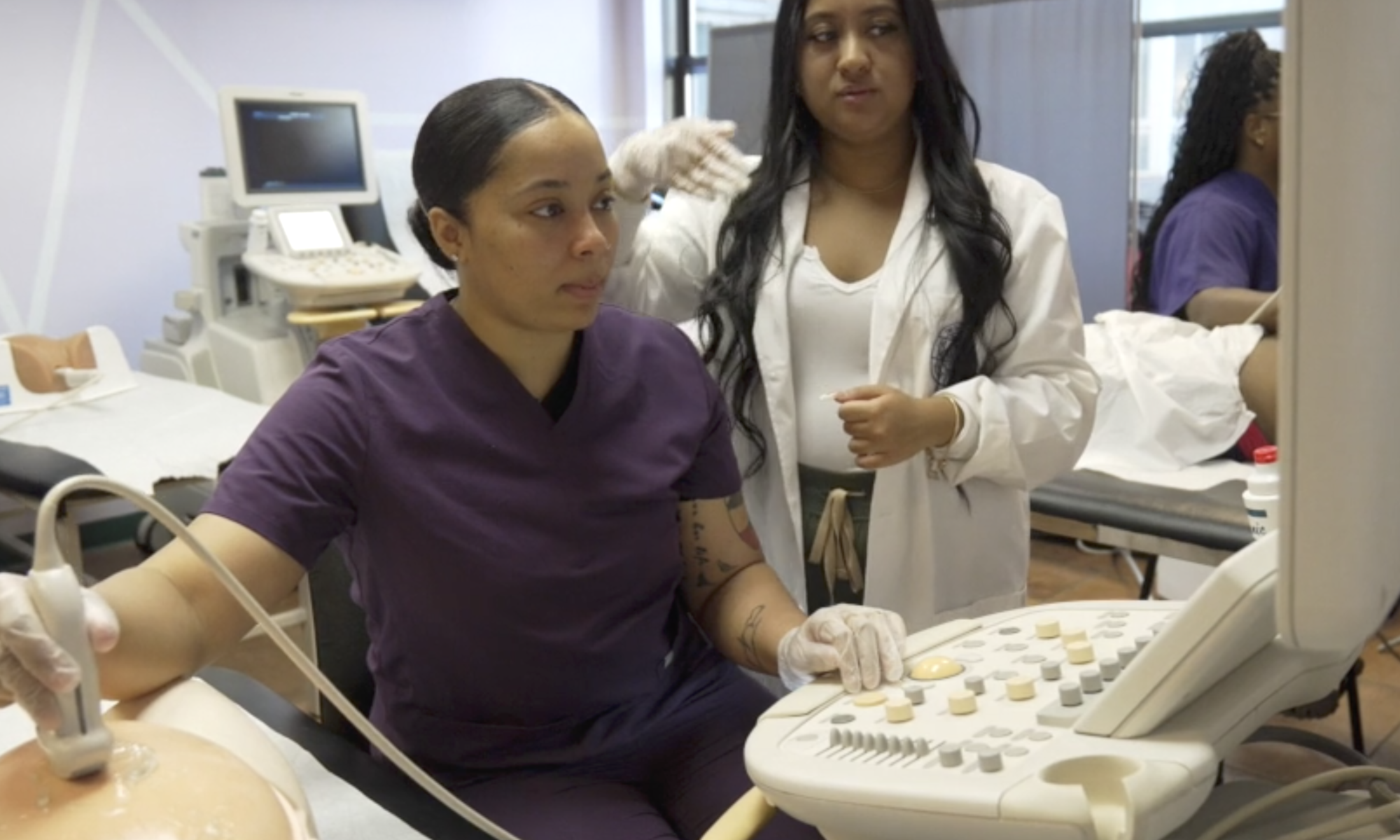
Mandl School Diagnostic Medical Sonography Lab


If you want a stable, rewarding, and respected career, few paths offer more opportunity than healthcare. Earning an Associate Degree in Healthcare is one of the smartest investments you can make, offering strong job prospects, competitive pay, and the chance to make a real difference in people’s lives.

Fast Track to a Career

Unlike traditional four-year programs, associate degrees at Mandl School, The College of Allied Health can be completed in about two years. That means you can start earning and building real-world experience much sooner. Students can quickly enter growing fields such as Diagnostic Medical Sonography, Surgical Technology, Respiratory Therapy, Dental Assisting, or Medical Assisting.

High-Value

Healthcare associate programs are value-driven education opportunities: you can earn a degree and start a career far faster and for a fraction of the cost of a 4-year degree.  At Mandl, you’ll receive focused, hands-on training with smaller class sizes and personalized support.

Strong Job Demand

The U.S. Bureau of Labor Statistics projects continued growth in healthcare careers over the next decade, especially for allied health professionals. Hospitals, clinics, and private practices need skilled team members who can step in right away, exactly the kind of graduates Mandl prepares.

A Career with Purpose

Beyond job security, a career in healthcare brings meaning. Every role, from medical assistant to surgical technologist, directly impacts patients and communities. With an associate degree, you’re not just earning a paycheck; you’re helping people live healthier, better lives.

Mandl School’s allied health programs are built to get you from the classroom to the career field efficiently and effectively.

Start investing in your future today and see how quickly your passion can become a profession. Apply Today!

HAVE A QUESTION?

  • Please do not add "1" to your number
  • This field is hidden when viewing the form